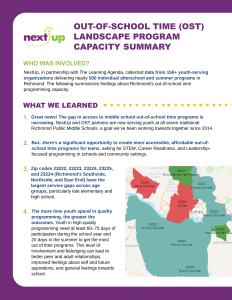
Following the initial 2024 OST Landscape Study, NextUp partnered with The Learning Agenda to conduct a deeper analysis of program capacity across Richmond’s out-of-school time (OST) expanded learning system. This second study reflects feedback and data from 150+ youth-serving organizations operating nearly 500 afterschool and summer programs across the City of Richmond.
Key Takeaways
1. Middle School Access Is Reaching a Major Milestone
The study highlights significant progress: OST partners are now serving youth at all seven traditional Richmond Public middle schools, reaching a long-standing strategic goal set in 2014. The middle school “gap” that once existed is steadily narrowing thanks to coordinated investments and partnerships.
2. Teens Still Need More Accessible, Affordable Programs
While middle school access has expanded, high school youth continue to face the greatest gaps. Teens expressed a strong desire for:
- STEM opportunities
- Career readiness pathways
- Leadership development
- Programs offered both in schools and in community-based settings
Expanding teen-focused OST programming remains a critical need.
3. Service Gaps Concentrated in Five ZIP Codes
Richmond neighborhoods with the fewest OST programs—across all age groups, especially late elementary and high school—include:
- 23222 – Northside
- 23223 – East End
- 23224 – Southside
- 23225 – Southside
- 23234 – Southside
These areas represent much of Richmond’s Southside, Northside, and East End, many of which include high concentrations of youth and English Language Learners.
4. Youth Thrive With Consistent Participation in High-Quality Programs
The study reinforces what national research has shown: youth need 60–75 days of OST participation during the school year and 20 days in the summer to get the most out of their programs.
When young people spend enough time in high-quality programs, they experience:
- Stronger peer and adult relationships
- Higher self-confidence and future aspirations
- Improved attitudes toward school, which can lead to higher attendance and academic performance
Consistency—not just enrollment—is vital for impact.
The Path Forward: A Collective Impact Approach
Expanding Access for Southside Youth
Three of the five priority ZIP codes fall in Richmond’s Southside, an area with:
- Large youth populations
- High numbers of English Language Learners
- Limited program availability across age groups
NextUp and partners are implementing collective impact strategies to address barriers such as transportation, language access, and program availability.
The Neighborhood Initiative – Southside (NIS)
This initiative, led by NextUp, with partners the Boys & Girls Clubs of Metro Richmond, Richmond Public Schools, and Liberation Center, pilots OST expansion efforts with support from the City of Richmond’s Safer Communities Grant.
The initiative focuses on:
- Increasing transportation and service capacity for new and existing youth development programs and resources
- Expanding translation and outreach resources
- Providing capacity-building support for youth development organizations and providers
Lessons from NIS can help guide future citywide out-of-school time expansion.
How to Get Involved
The study outlines several ways partners and community members can help expand OST access:
- OST Providers: Apply for program funding and join the NextUp Network (applications open January–February).
- Community Members: Volunteer to review program applications or support youth/community events.
- Funders and Partners: Invest in OST programming and capacity-building for Richmond youth.